An evening in the company of science and animal health
The veterinary school is the education for the country's veterinarians. At Kulturnatten you get a unique opportunity to see some of what the school's staff, researchers and students are working on.
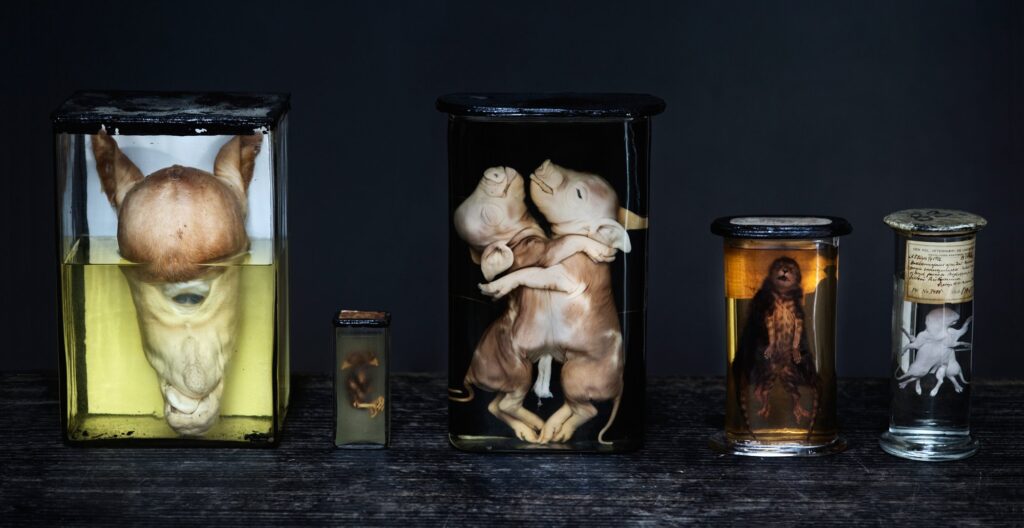
You can e.g. hear about parasites, forensic medicine, production and family animals, touch intestines or see more of the school's collections.
This year, you also have the opportunity to have your sick teddy bear diagnosed and treated, be shown around the Landbohøjskolen's garden or enjoy a piece of cake in Café Væksthuset.
So come by and have a pleasant and educational evening.
Address
Grønnegårdsvej 7,
1870 Frederiksberg C
https://vetschool.ku.dk
Time
18:00 - 23:00
Event type
Accessibility
Area

Associated events
Dissection at the anatomy hall
In the school's old anatomy hall, students are ready to display fresh specimens, dissect and answer your questions. If you would like to know more about the functions of the animal body or if you have the courage to touch a large horse intestine, brains from a cow, etc., then this is your opportunity.
The zoological collection
At the zoological collection you have the possibility to explore the many beautiful displays in the old classroom. The collection dates back to the 18th century and contains a selection of specimens from lice and fleas to larvae, octopuses, fish, crocodiles, elephants and much more.
Café Hav a Java Væksthuset
During the evening it will be possible to warm up a bit at Café Væksthuset in the flower garden of Landbohøjskolens Have. The café's menu includes coffee, lemonade, panini and cake.
A world of animal diseases
Step into the fascinating world of animal diseases and meet the veterinary pathologists who work with everything from conditions depriving us of man's best friends to animal cruelty cases, meat inspection, and animal models. Listen and watch to learn how eggs and chickensare produced before we eat them. You can also visit the pathology collection.
Talk: Is it dangerous to eat fish?
Parasites in fish occur in all fisheries zones on the globe. Some of them are able to infect consumers if they ingest insufficiently pretreated fish products. Here you can learn why we find parasites in the fish and how one can prevent infections. Talk begins at 18 o'clock.
The Children's Veterinary Academy
Have you ever wondered how veterinarians learn to examine animals? At the Children's Veterinary Academy, you can take part in fun and exciting hands-on activities in our simulation centre with teddy bears and specially designed models. Try being a veterinarian yourself by stitching a wound, finding a kidney, bandaging a paw, or give a vaccination.
What Can Animals Teach Us About the Human Heart?
What can animals teach us about the human heart? Hear a short talk on how animals help us understand heart disease. (Talks are in Danish.)
Interpretation of organ-organism sounds
A demonstration of how sounds from organs and tissues as well as organisms themselves can be interpreted and used in a scientific manner to diagnose health related issues and understand communication - from oysters and zebra fish to our own skeletal muscles.
Microbes – the good, the bad and the ugly
Microbes are everywhere – in our bodies, food and the environment. Some help us, many are harmless, while others can make us ill. But how can we control them? Visit our Kids’ Lab, where children and adults can try laboratory work and explore the world of bacteria, viruses, bacteriophages and antimicrobial resistance, and see research in action.
Come for a walk in the gut
Parasites like fleas and lice are well-known but many more parasites live in a complex world in the intestines. So come for a bit of gut-tourism and learn how worms and other parasites impact the health of animals and humans. We also show how climate change and increased travel may increase the risk of establishing dangerous parasites in Denmark.
Production animals. A gallery for the art of the p
How are the many efficient production animals we have in Denmark produced? Behind every liter of milk and every egg lie decades of research, technology and political priorities. The exhibition explores the scientific advances, veterinary challenges and related dilemmas that have shaped the efficient livestock production through the last 150 years.
Endangered plant species in Landbohøjskolens Have
Many plant species are today threatened with extinction as a result of human influence and climate change. Hear how the Landbohøjskolens Have, in collaboration with Nordic plant collections, is working to preserve rare and endangered plants for the future. On the trip, we meet some of the garden's endangered species and delve into their history.
The rabbit – Denmark’s most misunderstood “pet”?
Carrots, small cages and a life alone? Many of our ideas about rabbits don't match their actual needs. Join animal welfare researcher Cecilie Ravn Skovlund and veterinary specialist in small mammals Mette Halck as they debunk persistent myths and explain what science tells us about rabbit health, behaviour and what makes a good rabbit life.
Are we still keeping dogs in 100 years?
Veterinarian and associate professor, Helle Friis Proschowsky, who is co-author of the book "Your Competent Dog", takes the audience through a story about the modern family dog and discusses the question: Does the dog has a future with us – or will artificial intelligence and robot technology eventually replace “man's best friend”?
The voices of dead animals
What can a dead animal tell us? The lecture provides an insight into the work with dead wild animals, how they are examined to understand disease, environmental impacts and human-caused causes of death. With examples from everyday emergency services, eg. whales, wolves and animals in rewilding projects, it is explained what information they give.
The secret life of pets
Does the single cat need a companion? Are 'designer dogs' more harmonious and healthy than theunderlying purebred dogs? Is your horse fine outside, as long as it doesn't rain, is windy or snowing? Is the pet rabbitcomfortable with his droopy ears? And do we humans live happier and longer when we have pets? Professor Peter Sandøe challenges myths.
Zebrafish model for visualizing parasitic worm
Visitors are introduced to the zebrafish as a remarkable model organism and invited into a hidden world inside the fish, where parasitic worms can be seen migrating to the eye. The worms continue their life cycle when the fish is eaten by a fish-eating bird. Live zebrafish, larvae, and freshly laid eggs will be on display.